Children’s fiction is a personal favourite genre of mine! While some may judge, and wonder ‘why would a grown adult read books for kids?’, I strongly believe that children’s fiction holds more value than some may initially realise.
A strong asset of children’s fiction is principle – what is this story trying to teach a young child? What is the moral of the story? Because of this, many children’s novels hold deeper meaning and food for thought. Each story holds a subtle message.
Obviously, reading and interpreting is highly subjective. I am not here to tell you ‘this is exactly what the author intended’, because, frankly, how am I to know? But I do take great pleasure in reading children’s fiction through an adult lens, attempting to find more mature conceptual ideas within the stories; whether they were intended to be there or not.
Interpretations
My personal favourite is Lewis Carroll’s Alice’s Adventures In Wonderland. This is primarily due to the fact that nonsensical elements are heavily put down to ‘he was high when he wrote it’.1 Maybe this was true, I don’t know. However, I find that this story holds strong consistencies that, to me, seem too well constructed to be erratically thrown together.
When I read this novel, set in the late 1800s of the Victorian era, I interpreted the concept that Alice battles an internal struggle between growing up and staying youthful. It was typical of young Victorian girls to grow up swiftly and enter the world of proper and established women. Yet, the innocence and nonsensical world of childhood would surely be something to mourn.
Thus, is it possible that Carroll wrote his infamous tale highlighting Alice’s struggle with individual development? And, if so, what does this teach a young child absorbing this tale?
Individual Development in Alice
Individual development can be shown through both physical and mental improvement, and the display of such in a children’s book can often be seen as a lesson for young audiences.
In Carroll’s novel, I would argue that Alice is used as a symbol of development in many ways. The narrative perspective following her journey creates a sense of relatability for this audience, engaging them further and allowing them a sense of understanding.
Throughout the fantasy novel, Alice is found in a constant state of growing and shrinking; which may represent her internal dichotomy between growing up and holding onto her youth. While Alice’s physical changes of growing and shrinking may be a more obvious depiction of a young child’s development towards adulthood in Victorian England, Alice also matures emotionally…
Emotional Maturity
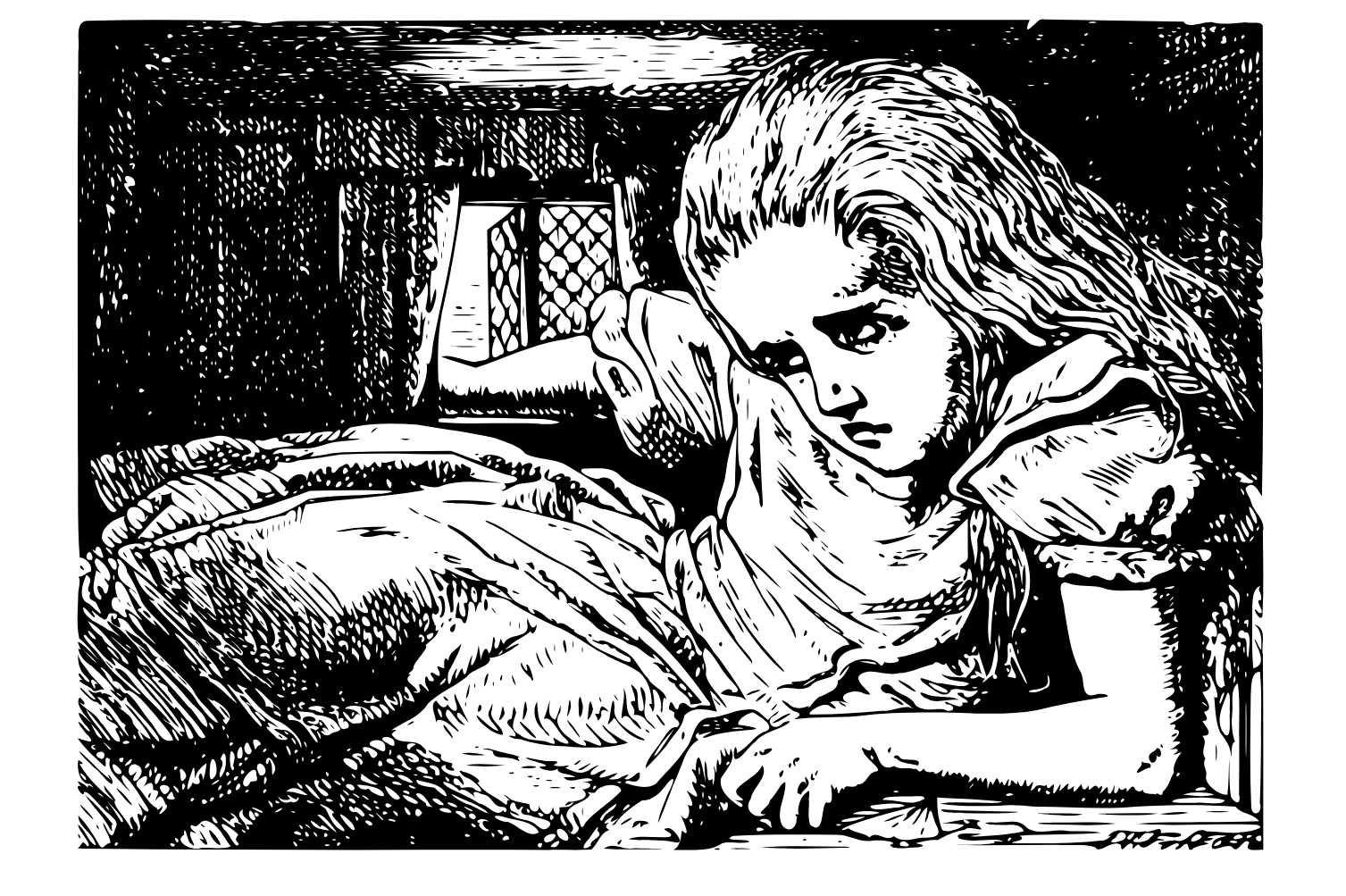
At the start of the novel, Alice displays childish immaturity as she ‘sat down and cried’ when things didn’t go her way.2 The reader sees an emotional progression further on in the novel, however, when Alice is said to be ‘getting used to queer things happening’.3
Here, Carroll suggests that Alice is perfectly capable of adjusting to new and challenging things – much like Victorian children were expected to do as they grew up and had to adjust into the societal expectations of the adult world.
Michael Ronsen comments on this view in his article, ‘Child’s Play’, stating that children’s books are ‘not so much for children’ as ‘a filling that goes between the child and the adult world’.4
Carroll’s novel is a perfect example of this as Alice works through the transition of one development stage to the next. This representation of Alice’s increase in growing maturity, as well as her physical changes, allows a young audience to understand that this development is inevitable and completely normal.
Rationalisation and Logic
Another way in which Alice displays development through the improvement of emotional maturity is her growing ability to rationalise information given to her.
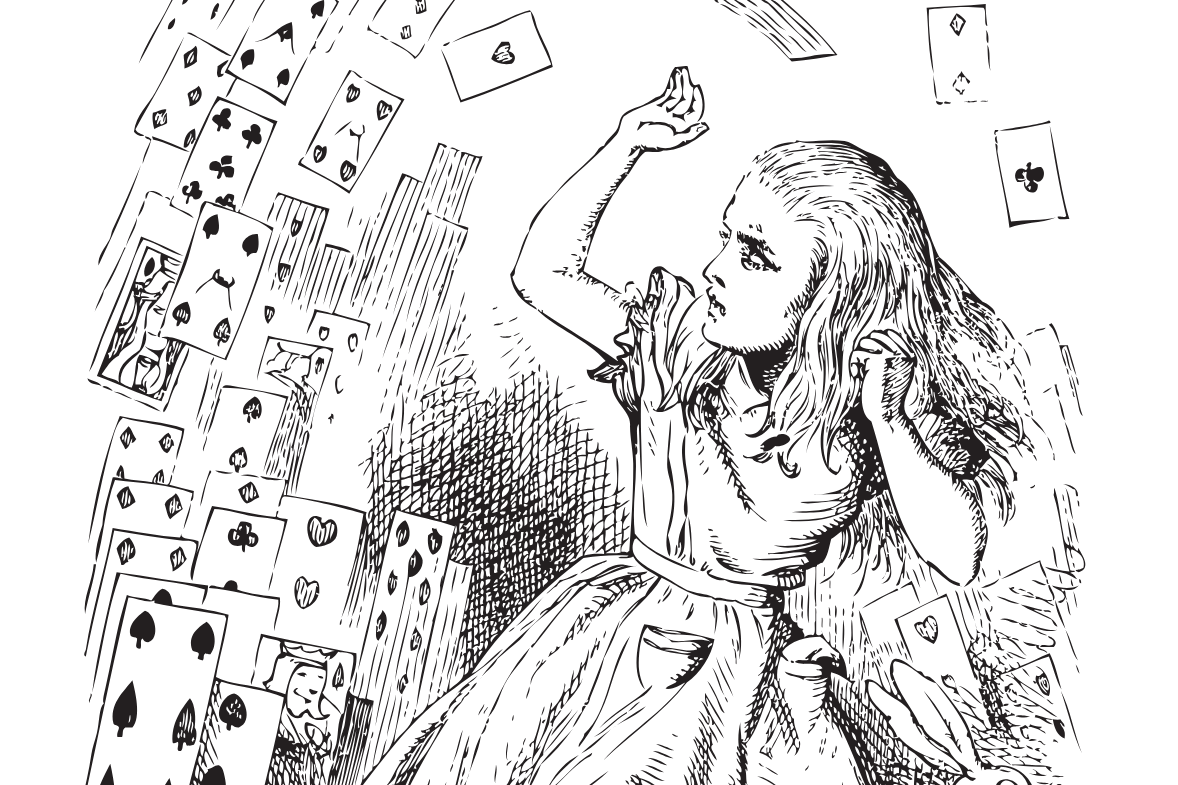
Research into cognitive development states that ‘adolescents can experience a rapid change […] a new level of insight and confidence […] logical rigour and psychological independence’.5 Carroll highlights this through Alice as she argues with the lack of sense in her trial towards the end of the tale: ‘it’s the oldest rule in the book […] then it ought to be number one’.6
This may represent Alice’s newly increased logical mind, as well as highlighting her assertive dominance when answering back to the king of Wonderland, giving herself a degree of covert power and confidence.
A younger audience may interpret this as a vital lesson, suggesting that not everything an adult tells them may be true/trustworthy. It not only suggests that children become more logical, but it also encourages them to think with their own mind.
Curiosity
Carroll also brings attention to the fact that Alice is ‘burning with curiosity’ and believes that things in Wonderland are ‘curiouser and curiouser’.7
This is arguably one of the most famous quotes from Alice’s Adventures in Wonderland.
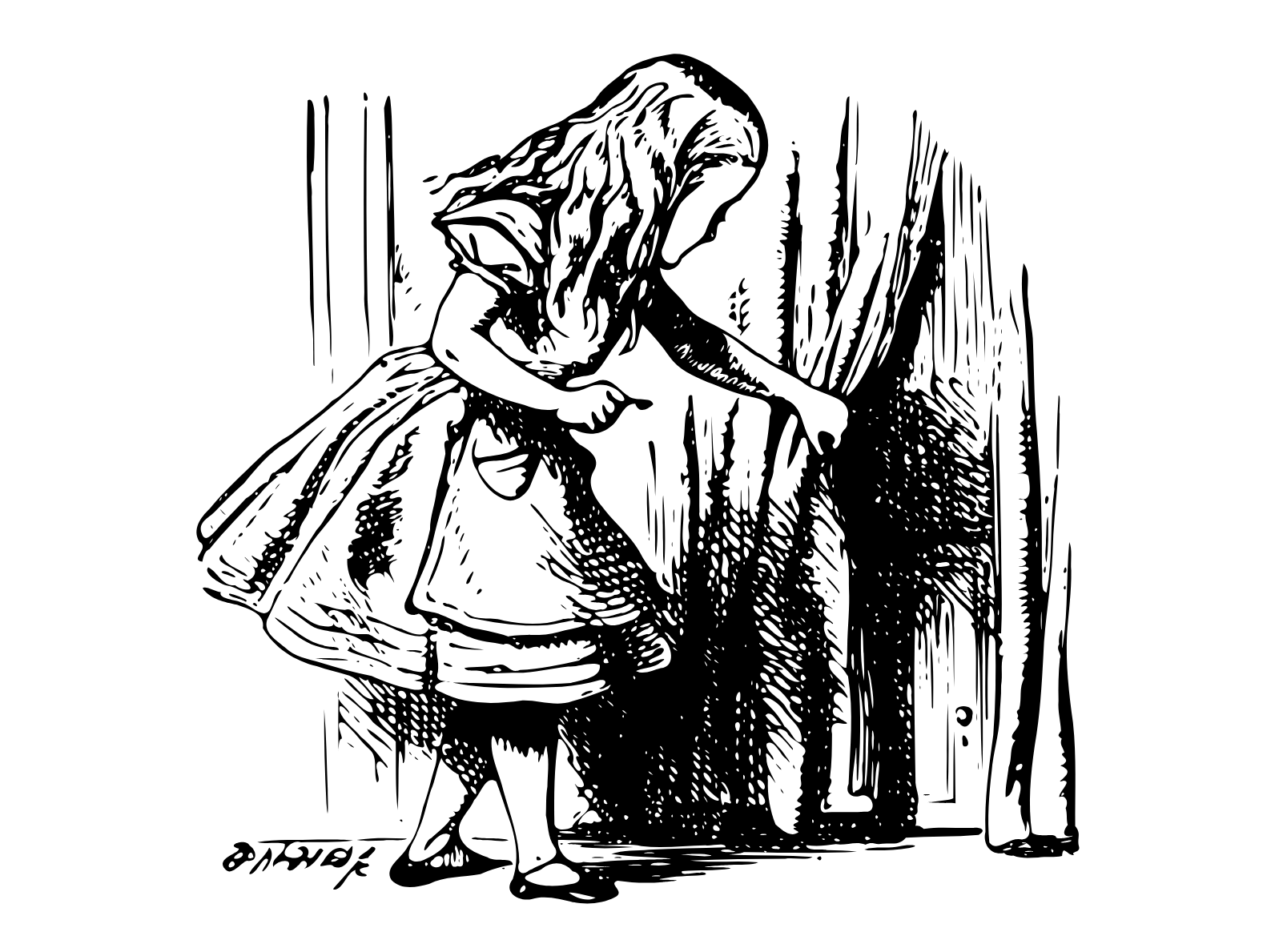
The use of these adjectives, specifically comparative adjectives, implies a gradual increase of curiosity as Alice embraces imagination and possibilities. Curiosity often leads to trouble for her and the book warns children of this as Alice ‘felt unhappy’ after a height change.8 Yet, this doesn’t discourage young readers from exploring and discovering new things as Alice allows her curiosity to lead her deeper into Wonderland, gaining new experiences, ‘that’s very curious! […] and in she went’.9
Here, the novel seems to explore the cognitive development of growing children as they open themselves up to new things in their surroundings.
While it does occasionally teach children that consequences will follow curiosity, it also encourages children to explore and experiment nonetheless. I would argue that this is a key lesson that Carroll tries to convey to his young audience.
Identity
Another example of individual development that Carroll presents through Alice’s adventure is the question of identity.
Throughout the novel, Alice is repeatedly asked ‘who are you’, firstly by herself: ‘Who in the world am I? Ah, that’s the great puzzle’, but primarily by the caterpillar.10
This may suggest that Alice is experimenting with self image and representation – something most children do as they start to enter the transition into adulthood.
The use of the second person pronoun ‘you’ creates a higher sense of directness, allowing the young audience to question themselves as they read. The repetition of this question also ensures an engraved thought is left in the reader’s mind.
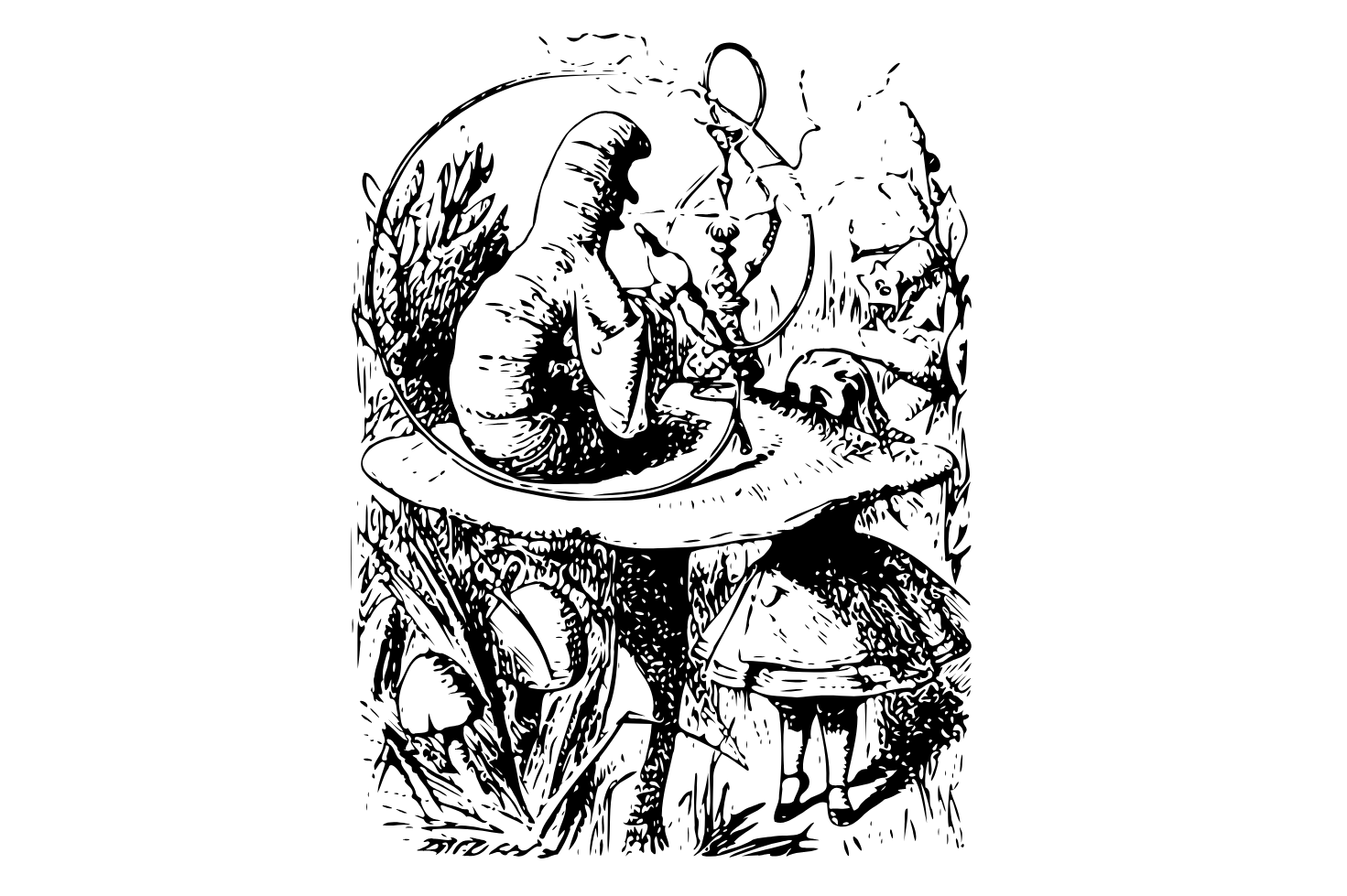
This is where I find doubt in the idea that Lewis Carroll was simply high as he wrote this novel, adding nonsensical elements to reflect his internal imagery. Looking at this novel through the lens of an internally conflicted young girl, and due to the fact that it is revealed Alice was having a ‘curious dream’, I’d argue that the caterpillar actually represents Alice’s conflicted conscience questioning her own identity.11
This is backed up by the fact that he responds to Alice ‘as if she had asked […] aloud’.12 It is important to note that a caterpillar is a symbolic creature of transformation and development; embracing the beauty of growth and change. Because of this, it can be argued that Carroll uses this character as a metaphor to warn his young audience that growth and change is inevitable, but also something they should embrace. This self reflection also brings forth the idea that individual development is seen as a gradual improvement of the brain as we age.
According to Steinberg’s theory on metacognition, introspection plays a cognitive role as we begin to think about our own emotions and thoughts; a phenomenon Steinberg believes to be an important role in the adolescent’s psychological growth.13 Alice displays signs of this growth as she states that ‘it’s no use going back to yesterday, because I was a different person then’.14 This adds a sense of acceptance for the young readers to understand.
‘Adults’ in Wonderland
To add to this idea, some critics state that ‘fundamental human questions are who am I?; What kind of person am I? […] have no meaning outside social interaction’.15
Suggesting that a child’s individual development also depends on their surrounding environment, this could link to the idea that each character in the novel represents a potential social interaction Alice may encounter in her development towards adulthood.
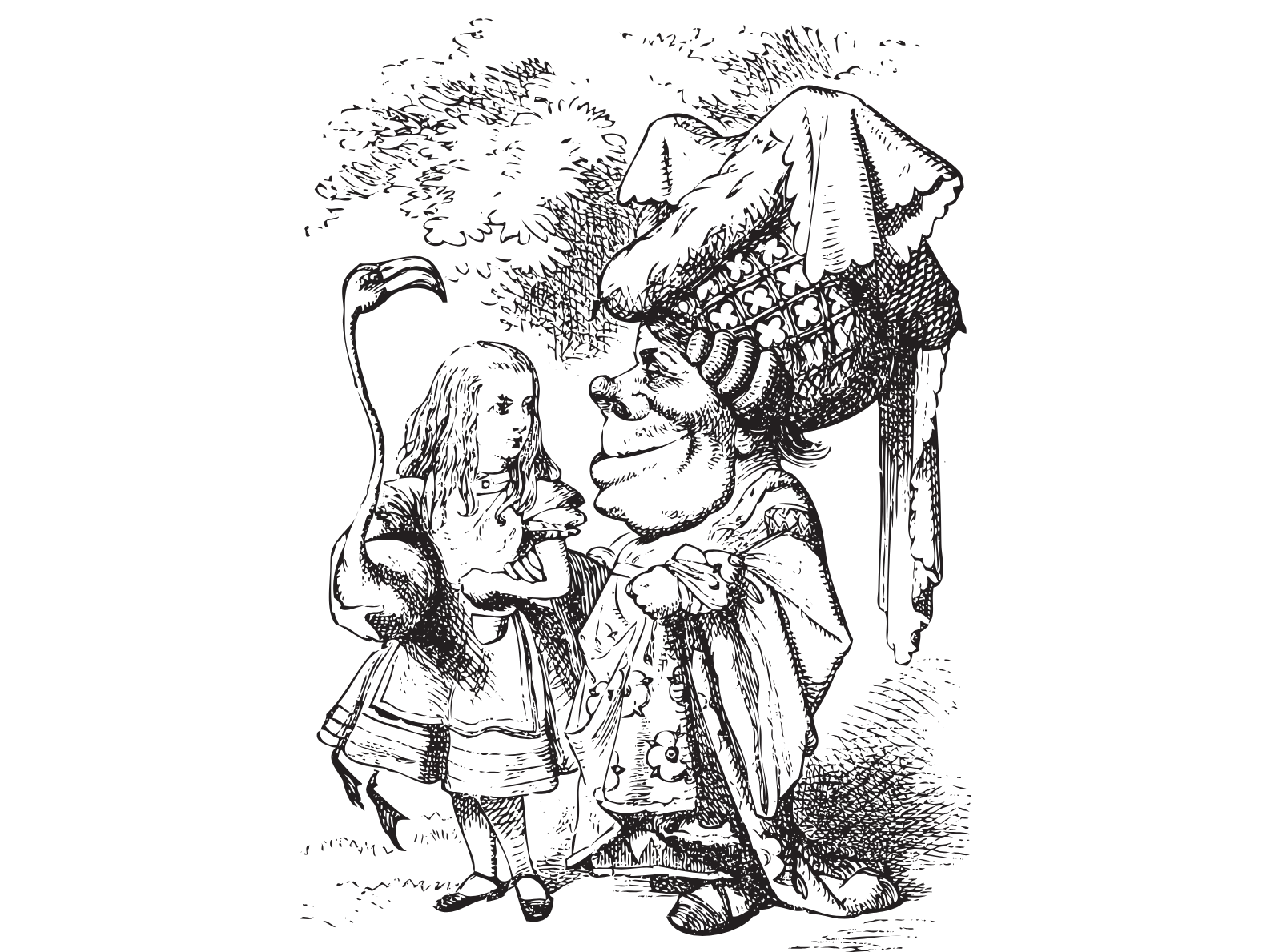
For example, the King and Queen of Hearts may be presented as a symbol of grown adults in authority with the abusive use of power. This is seen through the pair’s interactions: ‘off with her head!’ […] ‘consider my dear: she is only a child’.16
The term of endearment ‘dear’ and the looking down on Alice as ‘only a child’ suggests that these authoritative figures are the symbolic adults of Wonderland, and the fact that there are unfair consequences may suggest that adults in the real world are not always right. This encourages a young audience to make their own judgements on morals, rather than simply trusting what they’ve been told.
Furthermore, the Queen’s orders don’t often follow through (‘you shan’t be beheaded!’), which also poses the controversial suggestion that deceit can in fact be moral.17
The White Rabbit
Additionally, the White Rabbit may represent a rushed eagerness to enter adulthood. This is seen through the constant repetition of the statement of being ‘late’ throughout the novel.18
It could be argued that this character represents the panic and guilt of not maturing early on, like was expected of children approaching adolescence during Carroll’s time.
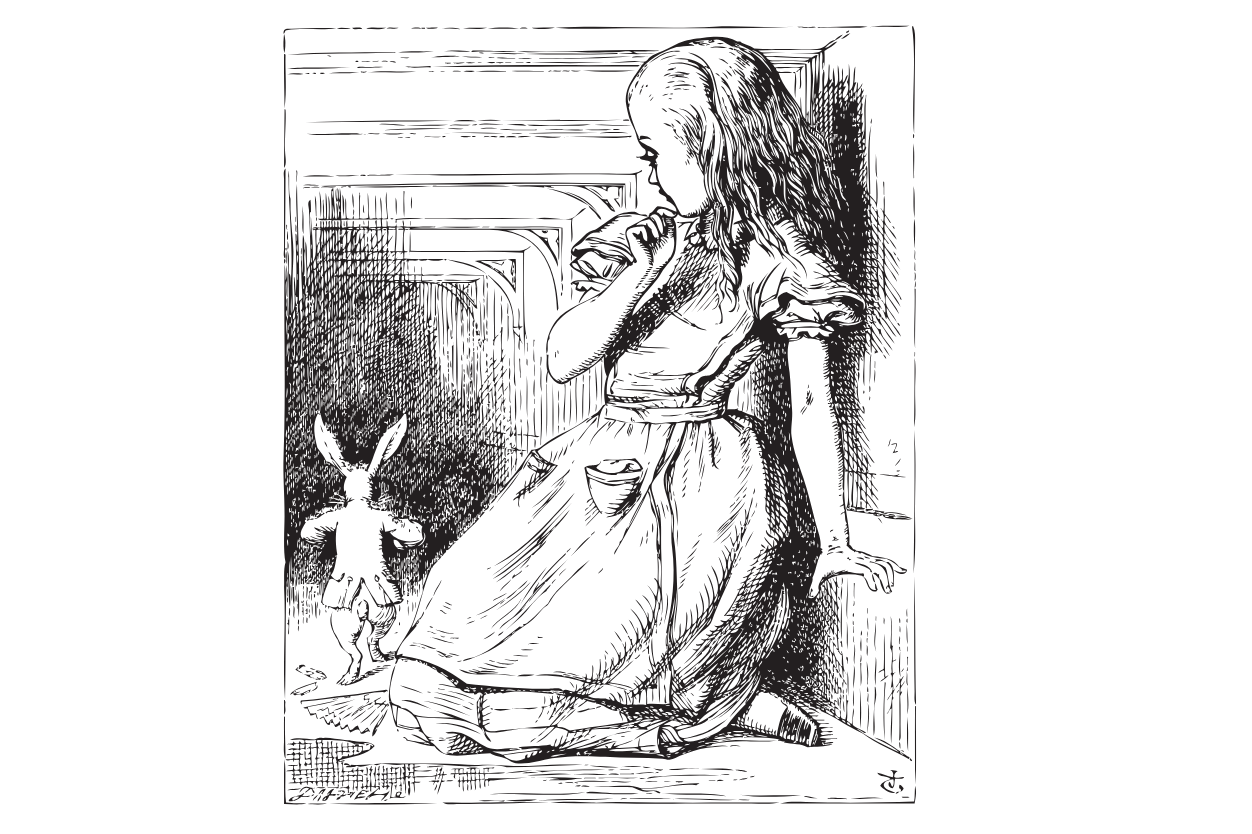
As well as this, it is also revealed that the White Rabbit is a herald in the Queen of Heart’s court; who seems to be a symbol of strict adult rules and constraints. To back this idea up further, it is believed that Carroll’s inspiration for this character was Dean Lidell, the father of Alice Lidell, whom the novel is based on.19
The dean of Christ Church was notoriously late and had many responsibilities due to his work, so to characterise the White Rabbit based on a busy adult figure in Alice’s life further emphasises her urge to follow the rabbit’s footsteps into adulthood.20 Alice’s inability to follow him without getting distracted, however, alludes to her vacillation between the two themes of growing up and clinging onto youth.
Alice’s Unnamed Sister
At the end of the novel, Alice wakes up from her dream and recites the events to her adult sister. Carroll then informs the reader that the older sister ‘half believed herself in Wonderland’, possibly to escape the ‘dull reality’ of adulthood.21
Within the last line of the fantasy novel, Carroll creates a semantic field of an ideal world: ‘loving heart […] bright […] eager’.22 This may be a reference to the ‘simple joys’ of Alice’s sister’s own childhood.23 This effectively changes the narrative from Wonderland representing Alice’s exploration of adulthood, to representing her adult sister’s form of escapism and longing for the innocence of youth.
This almost-circle ending creates a more dramatic and memorable effect due to the juxtaposition between growing up and grasping onto youth. The narrative symmetry pushes forth a perspective shift on the nightmarish characters and nonsense, now seen as nostalgia for the simplicity of youth.
So, what do you guys think? Is Lewis Carroll’s Alice’s Adventures In Wonderland simply a construction of Caroll high on shrooms; or is there a more interesting layer to the novel that we can pick apart?
If so, is your interpretation any different?
We’d love to hear your thoughts…
Footnotes
- Unknown Author, Is Alice in Wonderland Really About Drugs? (BBC News, 2012).
↩︎ - Lewis Carroll, Alice’s Adventures in Wonderland (London: Harper Press, 2010), p.8.
↩︎ - Ibid p.59.
↩︎ - Michael Ronsen, Child’s Play (The Guardian, 2008)
↩︎ - George J Lough, ‘Alice in Wonderland and Cognitive Development’, Journal of Adolescence, 6.4 (1983), 305-315 (p.311).
↩︎ - Carroll, p.117.
↩︎ - Ibid., p.2. ; p.10.
↩︎ - Ibid., p.29.
↩︎ - Ibid., p.70.
↩︎ - Ibid., p.13.
↩︎ - Ibid., p.123.
↩︎ - Ibid., p.44.
↩︎ - Laurence Steinberg, Adolescence (Boston: McGraw-Hill Higher Education, 2008) p.65
↩︎ - Carroll, p.100.
↩︎ - Delwyn Tattum and Eva Tattum, Social Education and Personal Development (London: D.Fulton, 1992), p.12.
↩︎ - Carroll, p.75.
↩︎ - Ibid., p.76.
↩︎ - Ibid., p.2.
↩︎ - Judith Curthoys, ‘Down the Rabbit Hole? Or Not…’, <https://www.chch.ox.ac.uk/blog/down-rabbit-hole-or-no> [accessed 9 March 2023]
↩︎ - Ibid. ↩︎
- Carroll, p.124.
↩︎ - Ibid., p.124.
↩︎ - Ibid.
↩︎
Bibliography
Primary Sources
Carroll, Lewis. Alice’s Adventures in Wonderland (Collins Classics). Reprint ed., William Collins, 2010.
Secondary Sources
Alice in Wonderland.net, https://www.alice-in-wonderland.net/. Accessed 19 February 2023.
Curthoys, Judith. “Down the rabbit hole? Or not….” Christ Church, Oxford, 1 September 2019, https://www.chch.ox.ac.uk/blog/down-rabbit-hole-or-not. Accessed 9 March 2023.
Karlsson, Jenny. “Alice’s Vacillation between Childhood and Adolescence in Lewis Carroll’s Alice’s Adventures in Wonderland.” Diva Portal, 2011, https://www.diva-portal.org/smash/get/diva2:409791/FULLTEXT01.pdf. Accessed 28 February 2023.
Lough, George J. Journal of Adolescence, ‘Alice in Wonderland and Cognitive Development’. Wiley, 1983. Accessed 25 February 2023.
Rosen, Michael, and Angela Saini. “Child’s play | Children and teenagers.” The Guardian, 25 September 2008, https://www.theguardian.com/books/2008/sep/26/michaelrosen.writing.booksforchildrenandteenagers. Accessed 8 March 2023.
Steinberg, Laurence D. Adolescence. Boston : McGraw-Hill Higher Education, 2008. Accessed 26 February 2023.
Tattum, Eva, and Delwyn P. Tattum. Social Education and Personal Development. D. Fulton, 1992. Accessed 25 February 2023.
All illustrative images retrieved via Canva by Vintage Illustrations.
 The English Nerd
Leave a comment